WI 1 | Andy, Old Lyme, etc.

WI 1.2 | Andy and John at the Movies


In the 1960s, Bleecker Street Cinema—with its Tuscan-columned portico, slightly shabby interior, and famously scary bathrooms—was one of three key repertory cinemas in New York City, showing older films alongside new independent ones. 1  It was the kind of place where halfway through a film, a little black house cat named Breathless (after the Godard film, of course) might begin to scale the theater’s screen, and the audience would cheer for it to reach the top before someone came and shooed it down. 2  Plagued by money troubles, the cinema ended its days in the ’90s as a gay porno house.
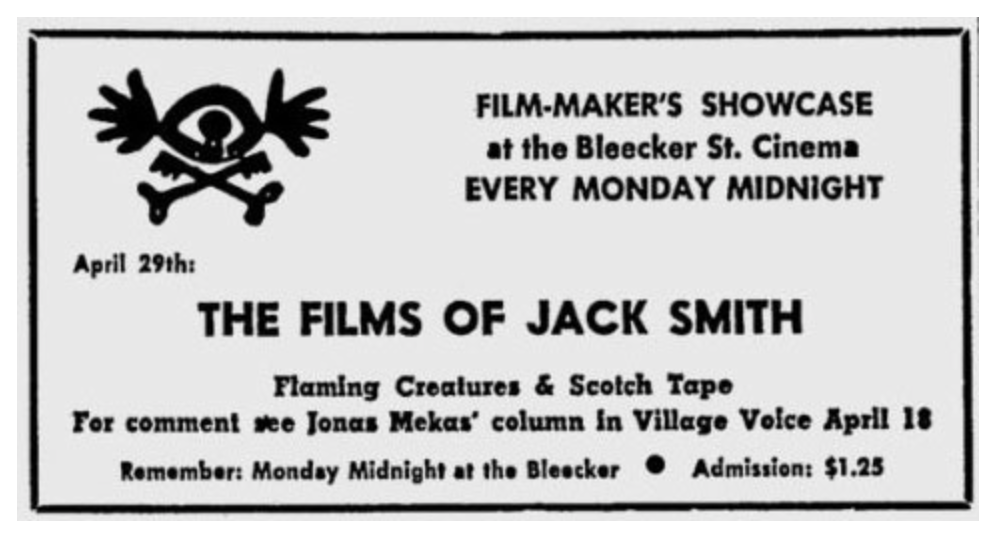
Despite this inauspicious end, on April 29, 1963, Bleecker Street Cinema hosted a midnight screening that shaped the future of the American avant-garde. Programmed by the Film-Makers’ Cooperative, this was the theatrical premiere of Jack Smith’s Flaming Creatures, described by Coop founder Jonas Mekas as “pornographic, degenerate, homosexual, trite, disgusting, etc.… and it is so much more than that.” 3  An Orientalist drag performance featuring a lipstick commercial and an orgy, among other things, Flaming Creatures was a revolutionary work of experimental cinema that led to arrests, jail time, and ongoing police surveillance for those who screened it, embroiling the Coop in a legal saga that exposed the worst excesses of American governmental censorship in the 1960s. It was also Andy Warhol and John Giorno’s first date. 4 

Perhaps sensing that art film was becoming the next big thing, Warhol had begun calling himself an experimental filmmaker as early as 1961—even though he had yet to learn how to operate a movie camera. 5  Around this time, his social circle also started to overlap with the New York experimental film community. Through his friend, the director Emile de Antonio, Warhol attended his first screening at the Film-Makers’ Cooperative, then headquartered in Jonas Mekas’ loft. 6  (Mekas, a Lithuanian refugee, reportedly slept under an editing table in the corner.) 7 
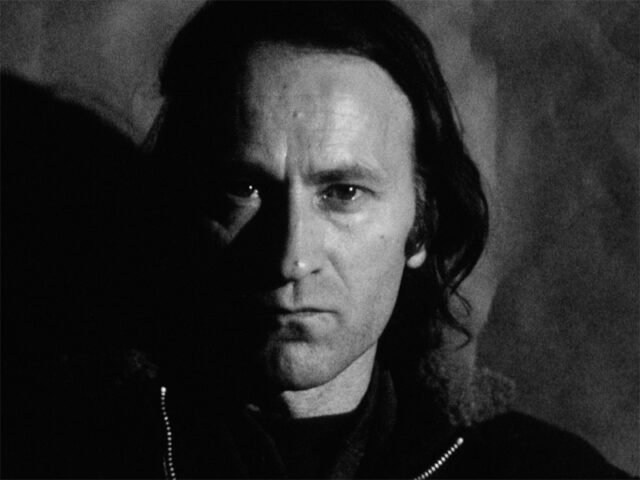
A film still of a close up of a man's head. He stares at the camera intensely with a hard expression, lips pushed together. The top of his jacket is visible, and the very top of his hair extends out of frame
Andy Warhol, Jonas Mekas [ST211], 1966
16mm film, black-and-white, silent, 4.5 minutes at 16 frames per second
Though Warhol and Mekas weren’t officially introduced until later, Warhol became a regular presence at Coop screenings, and Mekas recognized him as one of the revolving cast of characters who’d come and sit on his apartment floor. 8 

A filmmaker, poet, and above all an organizer of people, Jonas Mekas founded the Film-Makers’ Cooperative in 1961 as a “self-help group” for underground filmmakers who rejected mainstream commercial values. As he famously put it in the group’s founding statement, “We don’t want false, polished, slick films—we prefer them rough, unpolished, but alive; we don’t want rosy films—we want them the color of blood.” 9  In its early years, the Coop was both a film distributor and a social nexus, hosting screenings at Mekas’ loft and underground venues around the city for an eclectic coterie of friends, committed regulars, and the filmmakers themselves. “It was a very exciting period,” Mekas remembers: “everybody was there, from Salvador Dali to Allen Ginsberg, to Andy Warhol to Jack Smith to Barbara Rubin—everybody!”

By the fall of 1962, the young poet John Giorno began moving in the same circles, running into Warhol at art events and gallery openings. On April 28, 1963, at a gathering in artist Wynn Chamberlain’s loft on 222 Bowery, the pair got better acquainted. At the end of the evening, Giorno asked Warhol if they could get together again. “What about tomorrow night?” Warhol replied to Giorno’s surprise. 10 

The two had already seen Flaming Creatures countless times—Mekas had been staging rogue private screenings of it for months, unsure whether the film could ever be shown publicly—but the idea of attending a Hollywood-style premiere had panache. And so off they went to Bleecker Street, the beginning of a love affair that culminated in one of Andy Warhol’s most significant films: Sleep (1963), a five-hour-and-twenty-minute cinematic portrait of John Giorno sleeping in the nude.

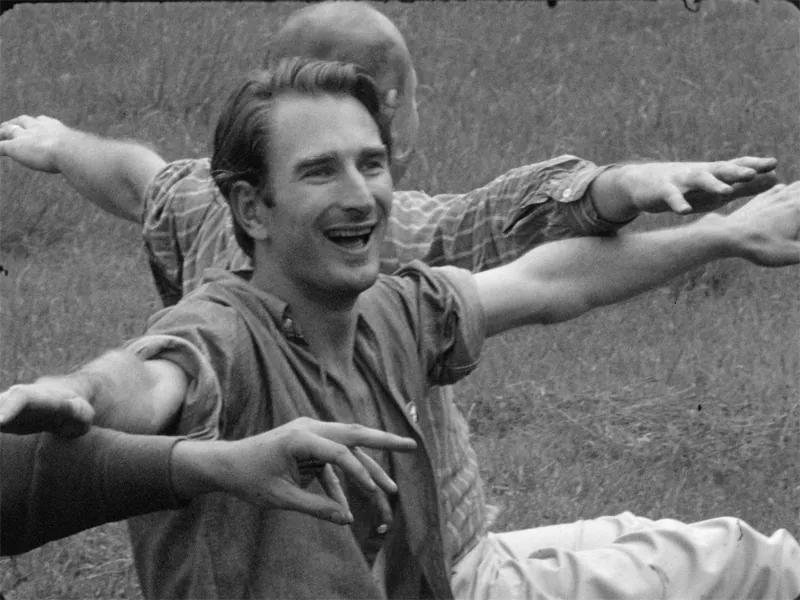
From April 1963 to the spring of 1964, Warhol and Giorno participated in New York City’s avant-garde film scene together. Film is a collaborative medium, and by mapping their relationship alongside the arc of Sleep’s gestation, one moves away from the myth of Warhol as a singular, detached artist and towards an appreciation of the bigger picture: 11  Sleep as part of a larger, queerer film movement that had life-or-death stakes for its participants in the repressive context of 1960s America. 12  As a couple, Warhol and Giorno attended screenings up to several times a week, went to concerts and parties, and vacationed in Old Lyme, Connecticut, over several weekends in the summer of 1963. When Warhol, a lifelong lover of cinema, finally picked up a camera for himself, he made home movies of Giorno before he ever started working on Sleep. 13  In one such film shot in Old Lyme, the camera traces the contours Giorno’s face and body, delighting in his physicality as he lies shirtless in the grass. Giorno then gets up to fly a kite, laughing as he wrestles with the string, bathed in sunlight.

Warhol’s adoption of amateur moviemaking reflected his cinematic environment: the vernacular language of home movies was central to the emerging New American Cinema of the 1960s. Ken Jacobs’ Blonde Cobra (1963), which screened alongside Flaming Creatures on April 29, or the film diaries of Jonas Mekas, for example, are essentially home movies. (Warhol was also close with the bohemian Film-Makers’ Coop members Marie Menken and Willard Maas, who went on to film scenes from his life in that style.)

Like Mekas, Jacobs, Menken, and Maas, Warhol would not have drawn a rigid distinction between home movies and experimental film, as both embraced a cinematic naïveté. Furthermore, in Warhol’s Old Lyme films, we can see him preparing for Sleep: he shoots tousled sheets on an empty bed next to a pair of shoes, 14  intimate close-ups of Giorno’s nude body as he lies in a hammock smoking a cigarette. The full-frontal nudity and tight shots of Giorno’s mouth and chest are more overtly erotic than Sleep’s final cut: “It felt like Andy was kissing or licking my skin with the camera, which is what he liked to do,” Giorno remarked, “Andy was making love to me while I slept!” 15 

Andy Warhol, [John Giorno, Old Lyme, Connecticut, 1963], 1963
16mm film, black-and-white, silent, 3 minutes

On their way back to New York from one of these trips to Old Lyme, Warhol asked Giorno to star in his first official movie, and Giorno was thrilled. “I want to be like Marilyn Monroe,” 16  he reportedly said, embracing a vision of gay love and stardom tinged with death that scholar Branden Joseph reaffirms in his reading of Sleep. 17  Warhol began filming Sleep on the night of July 10, 1963, after the couple got back to Giorno’s apartment from a Bleecker Street screening. He continued shooting in fits and starts through August, asking other filmmakers—like Jack Smith, Robert Frank, and Alfred Leslie—for technical help. With Jonas Mekas hyping up Sleep in his Village Voice column before it was even finished, pressure mounted on the inexperienced filmmaker to complete his monumental work; out of inspiration and necessity, Warhol drew on John Cage’s September staging of Eric Satie’s Vexations (which he attended with Giorno) for the film’s editing pattern. 18  Like Vexations, which repeated an 80-second score 840 times, Sleep repeats the same shots of Giorno over and over, following a pattern akin to Satie’s composition. 19 

The completed film helped inaugurate the emergence of what Mekas described in 1964 as an “underground star cinema,” in which real people play themselves. 20  The term “superstar,” which Warhol took from Jack Smith, originated in this drive to begin with one’s immediate surroundings and make them larger than life—in Warhol’s case, with his lover.

Andy Warhol, Sleep, 1963
16mm film, black-and-white, silent, 5 hours 21 minutes at 16 frames per second

Andy Warhol, Sleep, 1963
16mm film, black-and-white, silent, 5 hours 21 minutes at 16 frames per second

In the 1960s, however, success as a gay artist demanded a level of self-concealment; as Giorno later put it, “The art world Andy came up in was a very cruel, macho straight boy’s club, and Andy wanted in.” 21  Warhol thus masked Sleep’s queerness with a veil of plausible deniability, which was mirrored in its reception. Warhol biographer Blake Gopnik points out that “Early on, even reviews that admired Sleep seemed to go out of their way to paper over the man-on-man love that the film is about.” 22  After Warhol’s death, the (somewhat self-cultivated) myth of him as an asexual was so prevalent that in the 1990s, there was a concerted effort to “re-sex” Warhol and reclaim his queer identity. 23  Even today, Sleep is primarily discussed in an academic context in terms of its conceptual or formal qualities, 24  or to answer the question of how an audience was meant, exactly, to encounter five hours of fixed-frame snoozing. 25  But Warhol’s intimate relationship with Giorno was the raison d’être of Sleep, and the film cannot be understood without this context. 26 

The theatrical premiere of Sleep roughly coincided with the apex of Warhol and Giorno’s relationship. Despite all the press, Sleep’s January 17, 1964, premiere at a benefit for the Film-Makers’ Cooperative was attended by only nine people, two of whom left in the first hour. A Los Angeles screening of the film prompted threats of lynching against the theater’s manager. 27  The downfall of Giorno and Warhol’s relationship likewise coincided with what Mekas describes as the New American Cinema’s “dark period”: that spring, the police raided a screening of Flaming Creatures and seized Warhol’s Normal Love newsreel, which was lost forever. 28 

Ad in news paper from 1964 reading "We're temporarily under a cloud" with two sentences of smaller text underneath, and in large print "Film-makers' cooperartive 414 PARK AVE. SO., NY 16 (SUPPORT THE ANTI CENSORSHIP FUND). On the left, a drawing of a butterfly
Village Voice ad, March 26, 1964, 1964

Mekas, Ken Jacobs, and Florence Karpf were arrested, tried, and convicted on obscenity charges; their appeal reached the Supreme Court, where it was rejected. Police repression ensued: multiple theaters closed, the Coop’s headquarters was raided and officers were stationed outside of it nightly. 29  The death knell of Warhol and Giorno’s relationship was sounded that April when Warhol filmed Blow Job starring someone else, despite having promised the role to Giorno. 30 

An add from a newspaper from the 1960's for a show featuring 4 artists. The top reads "The new American Cine-kids" and on the left has an image of a butterfly.
Unknown ad

But Sleep’s story went on, and in 2024, the Film-Makers’ Cooperative held a second benefit screening of the film in John Giorno’s former apartment 60 years after its premiere. Over 100 people attended the sold-out event across two nights. Dozens stayed till the bittersweet end. 31  John slept on into the twenty-first century while Andy’s footage rolled, the film alive and well.


Text © Julia Curl

All Andy Warhol artwork © The Andy Warhol Foundation for the Visual Arts, Inc.

Andy Warhol films © The Andy Warhol Museum, Pittsburgh, PA, a museum of Carnegie Institute. All rights reserved.

Unless noted, all material The Andy Warhol Museum, Pittsburgh; Founding Collection, Contribution The Andy Warhol Foundation for the Visual Arts, Inc.

Footnotes

  1. James Hoberman, “The Movie Freak’s Guide to Film in New York,” New York, December 29, 1975, 73.
  2. Tracy Daugherty, Hiding Man: A Biography of Donald Barthelme (Picador, 2010), 231.
  3. Jonas Mekas, “Flaming Creatures and the Ecstatic Beauty of the New Cinema,” in Movie Journal: The Rise of the New American Cinema, 1959-71, 2nd ed., ed. Gregory Smulewicz-Zucker (Columbia University Press, 2016), 89.
  4. John Giorno, Great Demon Kings: A Memoir of Poetry, Sex, Art, Death, and Enlightenment (Farrar, Straus and Giroux, 2020), 32-33.
  5. Blake Gopnik, Warhol (Ecco, 2020), 312.
  6. Andy Warhol and Pat Hackett, POPism: the Warhol ’60s, 1st ed (New York: Harcourt Brace Jovanovich, 1980), 29.
  7. Jonas Mekas, “The Film-Maker’s Cooperative: A Brief History.” The Film-Makers’ Cooperative. Accessed April 27, 2025. https://film-makerscoop.com/brief-history.
  8. Jonas Mekas, “Jonas Mekas – Relationship with Andy Warhol,” interview by Amy Taubin. Web of Stories – Life Stories of Remarkable People. September 9, 2011. Accessed April 27, 2025. https://www.youtube.com/watch?v=kri2-BAlQEg
  9. Jonas Mekas, “The First Statement of the New American Cinema Group,” in Film Culture Reader, edited by P. Adams Sitney (New York: Praeger Publishers, 1970), 83.
  10. Giorno, Great Demon Kings, 32.
  11. As David Schwartz writes, “It is a fallacy to think of Warhol as a detached observer. Just the opposite; his unyielding gaze becomes a powerful form of direction—of both the actors and the audience.” David Schwartz, “Spending Time With Andy,” Moving Image Source, June 4, 2008.
  12. Government censorship and state-sponsored violence aside, Warhol was well aware of the physical danger that being queer could engender even in the relatively gay-friendly world of Greenwich Village: his gay friend and collaborator, Taylor Mead, was regularly harassed and beaten to the point of broken bones by neighborhood men. Gopnik, Warhol, 321-22.
  13. Thank you to The Andy Warhol Museum for providing access to the archival material described in this article, particularly Patrick Seymour, Publications Director; Matthew Gray, Director of Archives; and Emily Rago, Assistant Director of Archives.
  14. One might be tempted to read these shoes in light of the graphic description of Warhol’s shoe fetish in Giorno’s memoir. Giorno, Great Demon Kings, 55.
  15. Ibid., 63.
  16. Ibid., 54.
  17. Branden W. Joseph, “The Play of Repetition: Andy Warhol’s ‘Sleep,’Grey Room, no. 19 (2005): 37.
  18. Angell, “Sleep (1963),” 11.
  19. See Joseph, “The Play of Repetition,” and Giorno, Great Demon Kings, 72.
  20. Mekas, “Emergence of the Underground Star Cinema,” in Movie Journal, 129.
  21. As Giorno writes in full, “Andy completely hid his sex life. He was a commercial artist, he wanted to make money. The art world Andy came up in was a very cruel, macho straight boy’s club, and Andy wanted in. Gay doesn’t sell. If all the recent exhibits about Andy hide his sexuality, that’s not going against Andy, that’s perfectly like Andy.” R.M. Vaughan, “Pop Tart: Sex and Andy Warhol,” Xtra! No. 351, April 9, 1997, 31.
  22. Gopnik, Warhol, 320.
  23. Vaughan, “Pop Tart: Sex and Andy Warhol,” 31.
  24. A noteworthy exception here is Ara Osterweil, Flesh Cinema: The corporeal turn in American avant-garde film (Manchester University Press, 2014). Otherwise, see Callie Angell, “Sleep (1963),” in The Films of Andy Warhol: Part II (Whitney Museum, 1994); P. Adams Sitney, Visionary Film: The American Avant-Garde, 1943-2000, 3rd ed. (Oxford University Press, 2002); and Joseph, “The Play of Repetition,” 22–53.
  25. See Justin Remes, “Serious Immobilities: Andy Warhol, Erik Satie, and the Furniture Film,” in Motion(Less) Pictures: The Cinema of Stasis (Columbia University Press, 2015), 31–58; and Melissa L. Mednicov, “Soundtrack Not Included: Andy Warhol’s Sleep,” in Pop Art And Popular Music: Jukebox Modernism (Routledge, 2018).
  26. Special thanks to Bonnie Whitehouse, Archivist and Registrar at Giorno Poetry Systems, for helping me work through Giorno’s archival material, which was invaluable to this article.
  27. Mekas, “More on Warhol’s Sleep,” in Movie Journal, 153-54.
  28. Mekas, “The Year 1964,” in Movie Journal, 181.
  29. Ibid., 182.
  30. Giorno, Great Demon Kings, 106.
  31. One young hero of cinematic endurance wore a different Film-Makers’ Cooperative t-shirt each night and sat in the front row for both screenings, only getting up in between reel changes; “I just really like the film,” he remarked. Another attendee commuted to the screening directly from Texas. More like a party than a typical moviegoing experience, the night’s energy was electric.
WI 1.1

Warhol’s Time in Old Lyme

Grace Marston
WI 1.2

Andy and John at the Movies

Julia Curl
WI 1.3

The Summer Warhol Joined the Avant-Garde

Blake Gopnik